

What is
dry ice?
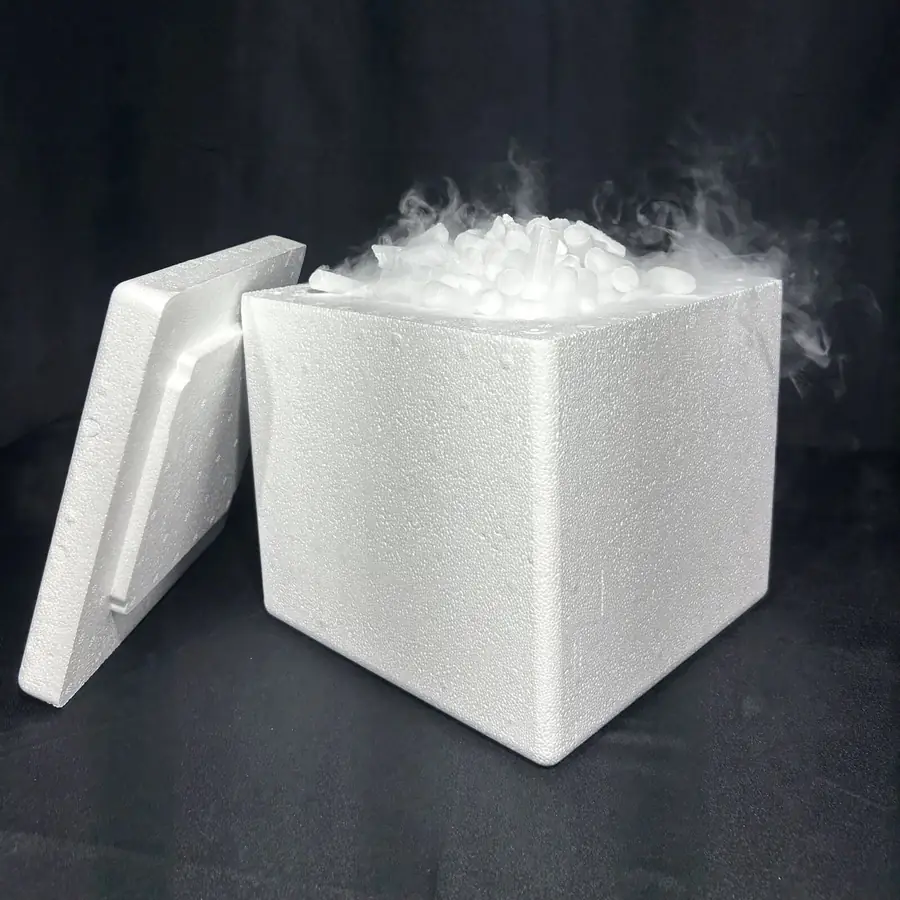
It’s carbon dioxide (CO2) in solid form, at −78.5 °C. It doesn’t melt: as it warms up it turns straight into gas. That’s why it cools far more than ordinary ice and leaves everything dry.
In Spanish it’s hielo seco, also called nieve carbónica; in Catalan, gel sec.
- Substance
- Carbon dioxide (CO₂)
- State
- Solid
- Temperature
- −78.5 °C at atmospheric pressure
- Change of state
- Sublimation: from solid to gas, with no liquid
- Residue
- None: it doesn’t wet anything or leave puddles
- DryIcePack formats
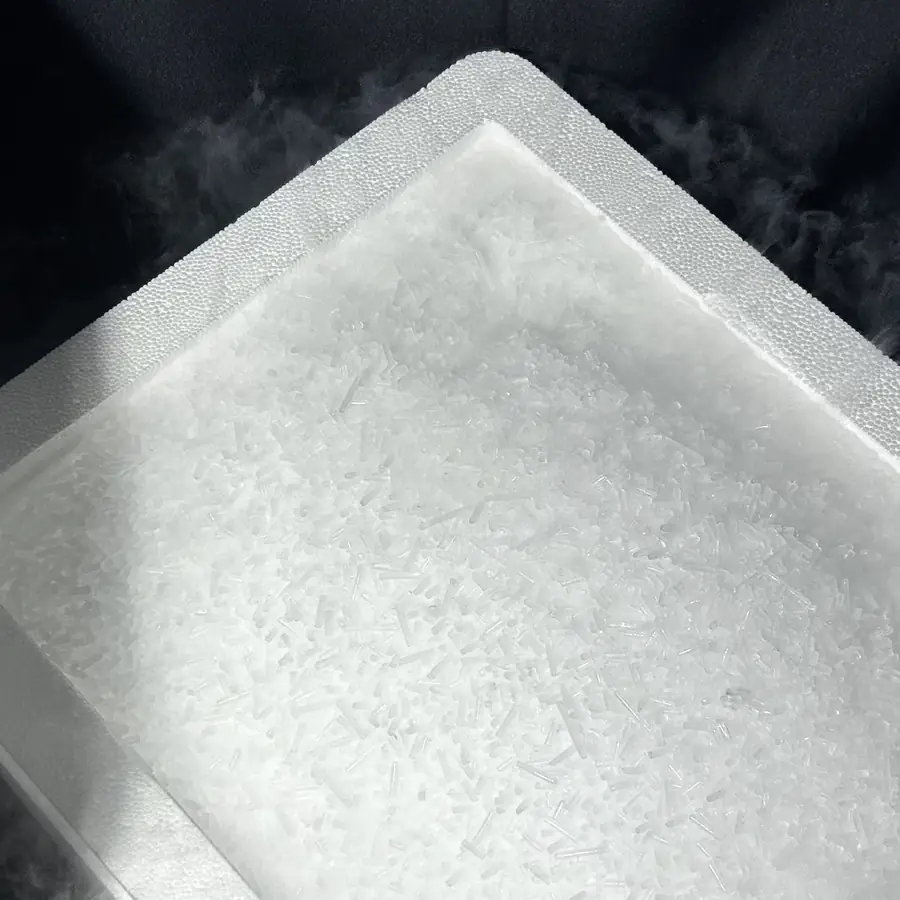
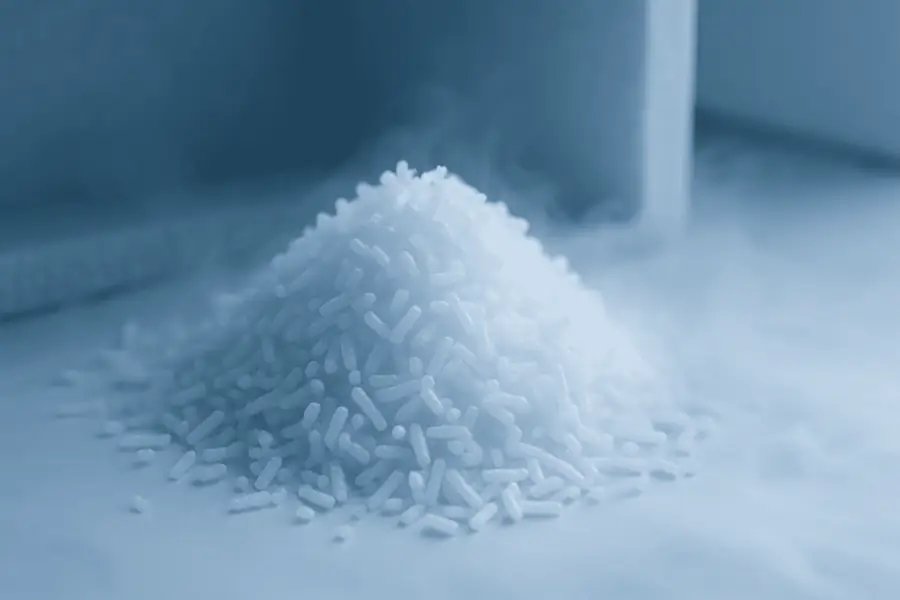
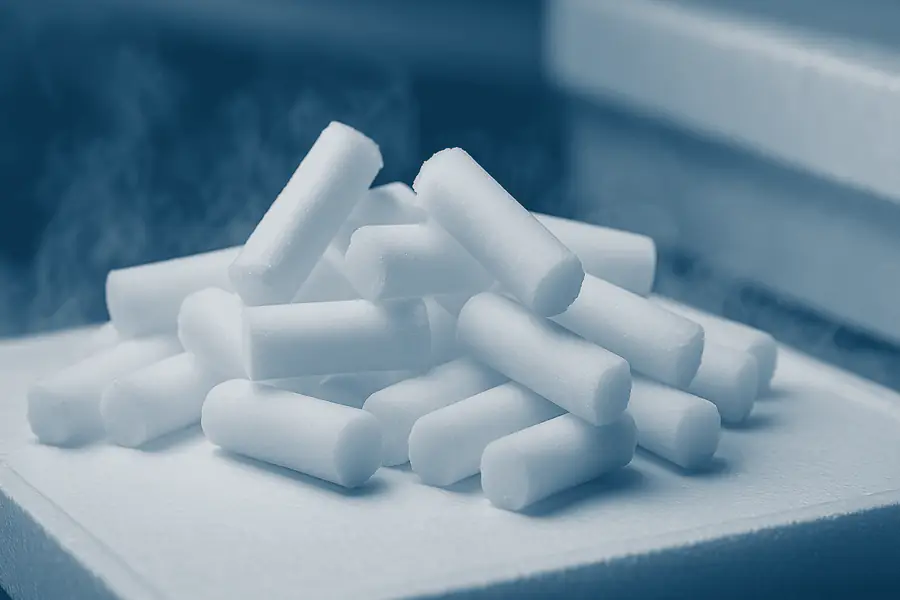
- 3 mm pellets and 16 mm nuggets
- Transport
- UN 1845 · Carbon dioxide, solid
How is it different from ice and ice packs?
| Dry ice | Water ice | Ice packs and gels | |
|---|---|---|---|
| Temperature | −78.5 °C | 0 °C | Depending on the model, from 0 to about −33 °C |
| As it warms up | Turns into gas | Melts into water | Thaws |
| Leaves liquid | No | Yes | No, but condensation forms |
| Reusable | No: it’s used up | No | Yes, by refreezing |
| Used for | Frozen goods, samples, fog, processes | Chilling drinks and fresh produce | Chilled goods on short journeys |
Figures for ice packs and gels vary by manufacturer.
Actual size.
This is how big the two formats are. The on-screen size is approximate.
Where does it come from?
-
CO₂ · Gas
Captured
The CO₂ usually comes from industrial processes that already emit it, such as fermentation or chemical plants.
-
CO₂ · Liquid
Purified and liquefied
It’s cleaned and compressed until it turns liquid.
-
CO₂ · Snow
Turned into snow
When the pressure is released, the liquid cools and becomes CO₂ snow.
-
CO₂ · Solid
Pressed
The snow is pressed through a die: out come the 3 mm pellets or the 16 mm nuggets.
As it sublimates, that CO₂ returns to the air. Because it reuses a gas that was already being emitted, it usually doesn’t add to emissions; the impact comes mainly from transport.
Questions about dry ice
How do I store it when it arrives?
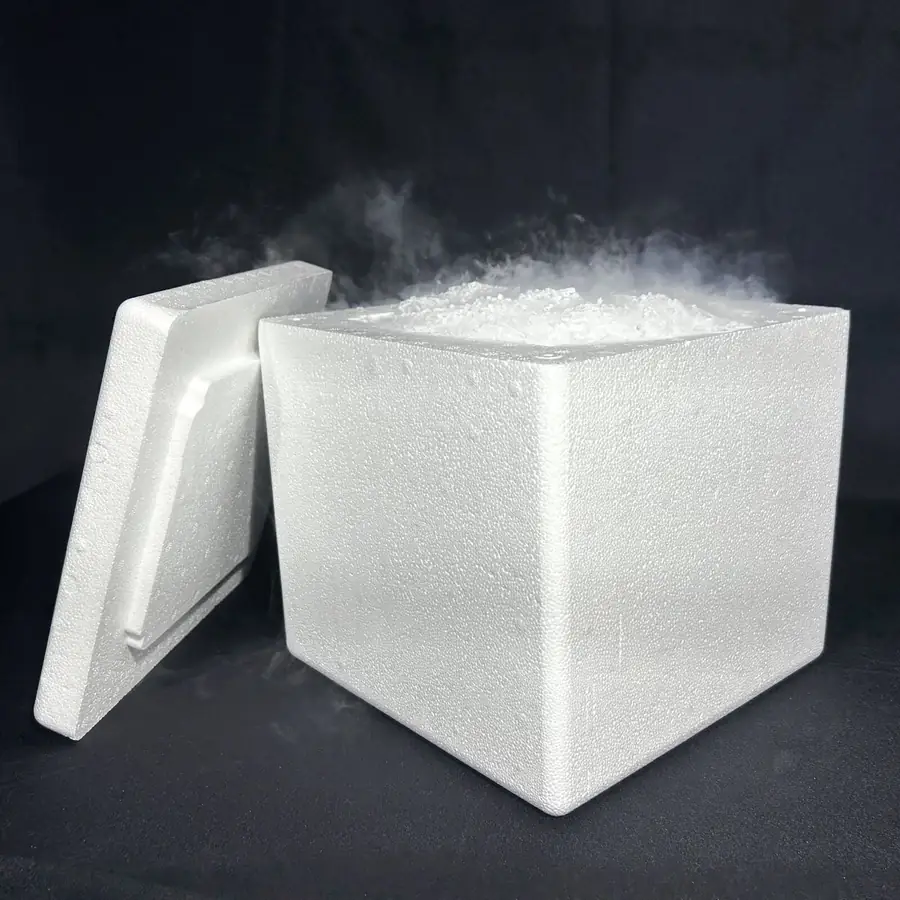
In its EPS box, with the lid on but not taped shut, somewhere cool and ventilated, out of reach of children and pets. The container must never be airtight.
Can I put it in the freezer?
No. At −78.5 °C it’s far colder than a home freezer (−18 °C): it can damage the thermostat and the seals, and it will keep sublimating anyway.
Is it the same as liquid nitrogen?
No. Liquid nitrogen is a different substance: it’s a liquid, at about −196 °C. Dry ice is solid CO₂.
How much do I need?
It depends on the use, the hours and the insulation. For fog, as a guide: 3 kg at home, 10 kg for a big party and 15 to 20 kg for a bar or an event. For transport or samples, tell us the hours and the volume and we’ll work it out.
Now you know what it is. Order before 12:00 and have it tomorrow.
Order now and you’ll have it on the morning of Tuesday 20 October